The North
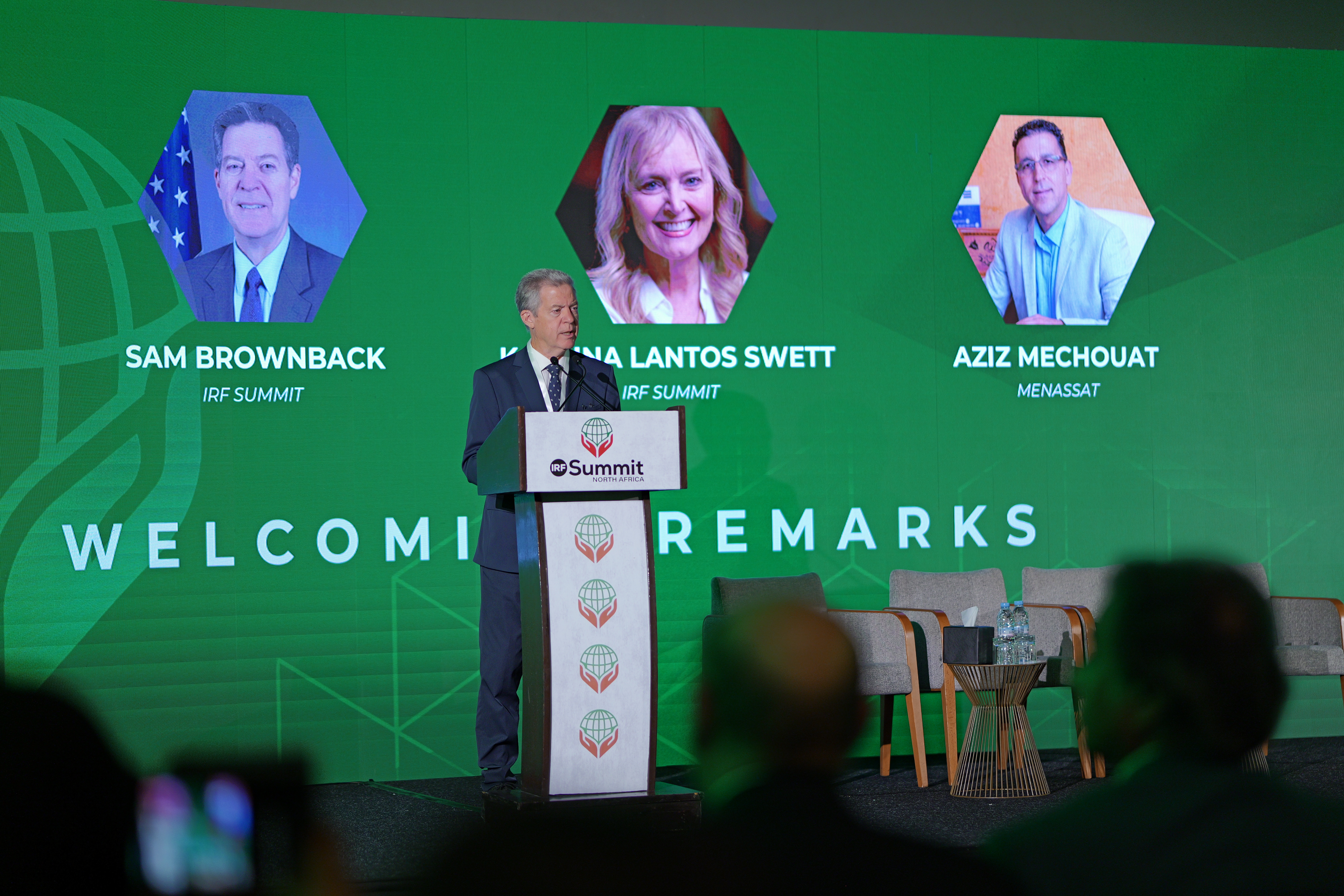
Africa Summit 2026: Religion, Society, and Law concluded in Casablanca. The
summit was organized by the Menassat Foundation for Research and Social
Studies in partnership with the International Religious Freedom Summit,
the Lantos Foundation for Human Rights & Justice, and The
Brownback Group. The event brought together government officials, members
of parliament, judges, academics, religious leaders, diplomats, representatives
of international organizations and civil society institutions, as well as
researchers from around the world.
Held over
three days, the summit served as a regional platform for dialogue and the
exchange of expertise on the relationship between religion, society, and law,
as well as ways to strengthen coexistence, uphold human dignity, protect rights
and freedoms, and build more stable and open societies.
Participants
emphasized that the world is facing growing challenges, including social
polarization, digital disinformation, and the exploitation of religion in
political and geopolitical conflicts. They stressed that addressing these
challenges requires a comprehensive approach grounded in the rule of law,
scientific research, dialogue, and cooperation among public institutions, civil
society organizations, and religious actors.
The summit
concluded with a series of key messages and recommendations. Chief among them
was the affirmation that human dignity should serve as the guiding
principle for public policies and legislation. Participants also underscored
that protecting freedom of religion is closely linked to safeguarding
freedom of thought, expression, and association, ensuring equality before the
law, and preventing discrimination.
Participants
also examined Morocco’s experience in the field of religious governance and the
efforts it has made to promote moderation, tolerance, and dialogue among
cultures and religions, thereby making religion a source of stability and
peaceful coexistence.
The summit
further addressed the role of institutions in promoting a culture of human
rights, strengthening dialogue, and protecting human dignity through an
approach that balances the preservation of rights and freedoms with the
maintenance of social cohesion.
Regarding
reform, participants stressed that sustainable legal reforms can only succeed
if they are based on scientific knowledge, societal dialogue, and broad public
participation. They called for strengthening the role of universities, research
centers, and think tanks in supporting public policies and evidence-based
decision-making.
Participants
also called for developing new approaches to address the challenges of the
digital age, particularly misinformation and polarization fueled by digital
platforms, through greater investment in education and culture, the development
of appropriate legal frameworks, and enhanced international cooperation.
The summit
discussions reaffirmed that intercultural dialogue should serve as a practical
tool for building trust, promoting social peace, fostering shared citizenship,
and respecting religious and cultural diversity as an asset to societies rather
than a source of division.
Participants
expressed their appreciation for the conditions provided by Morocco to ensure
the success of this international event, praising the high quality of its
organization and the country's renowned hospitality, which reflect the
Kingdom’s position as a space for dialogue, openness, and intercultural
exchange.
They also
commended the Menassat Foundation for Research and Social Studies for
launching this initiative, driven by its conviction that scientific research
and dialogue serve as a bridge between knowledge and policymaking, between
civil society and institutions, and between North Africa and its international
partners.
Participants
considered the success of the summit’s inaugural edition to mark the beginning
of a new regional path for dialogue and cooperation, aimed at strengthening the
exchange of expertise, advancing knowledge production, encouraging
evidence-based reforms, and promoting a culture of dialogue and mutual respect.
At the
close of the summit, participants reaffirmed their commitment to continuing
this process by developing mechanisms for scientific and institutional
cooperation and encouraging joint initiatives among universities, research
centers, and national and international institutions, thereby contributing to
the promotion of human dignity, the rule of law, peaceful coexistence, and
sustainable development throughout North Africa and beyond.